Showing posts with label Warm-up. Show all posts

Thursday, October 21, 2010

Stability~Variability in Warm-up


Without going into the goal and the structure of  warm-up in details (for some interesting insights I suggest checking the following  articles by Carl Valle and Derek Hansen), I wanted to draw attention to interplay between stability and variability in it (although this discussion could be expanded to whole workout, training day, microcycle, mesocycle, season plan and longer depending on the time frame under which we are analysing this phenomena).


In short, the main purpose of the warm-up is to prepare the athletes for the main part of the workout. As late Charlie Francis used to say „Do whatever you need to warm-up“, which basically means don't follow the dogmatic hypes and limit your options by saying negative or absolute claims, like „No to static stretching“. Derek Hansen wrote excellent article on this subject which is available here. I am re posting some of my old thought from a thread at Charlie Francis forum regarding static stretching and warm-up:

1. Research is usually poorly designed... too much stretches (couple of times for 30sec or longer) and with great intensity, without 'dynamic transition': Stretch then jump

2. Warm-up routine that elites used for years is hard to change drastically and abruptly: stretching in warm up have psychological reasons as well due habits... kicking stretching out you may gain 2% in power, but lose 20% in motivation

3. Sometimes teams have poor warm-up, like jogging, stretching on the floor for 15mins and then starting with high intensity.

4. Everybody is different, also in team settings. Not that everybody need different warm-up, but they need their own time to work on the areas they feel the need to do

5. Stretching in the warm-up is more a TEST to see if everything is ok, rather than a mean to warm-up, prevent injury or increase ROM. If you feel stiff, you will make it worse with stretching. Do easy, gentle dynamic warm-up, then test the ROM and looseness with easy stretch and if ok proceed if not do more warm-up for the area.

6. "Do whatever you need to do" --- C.F.: why would you limit yourself with bunch of rules, like NO STRETCHING? I was used to be like that, but I now try to teach my athletes PRINCIPLES of good warm-up, how they need to feel and should they progress.

7. Having said this, I guess INTERMITTENT stretching is the best solution. Athlete have their own time in the team warm-up, they can test if they are loose. So basically, you do progressive dynamic warm-up with periods of easy statical stretching used to test the looseness and keep your athletes happy


Having said this I can progress to the actual topic of this article. As we have pointed out, the main purpose of the warm-up is to prepare the athletes for the main part of the workout. Someone can visualise this process as the preparation of the Formula One racing car for the race or practice. Certain check-ups need to be made and certain routine should be followed.


This is why having developed sound warm-up routines (for different types of workouts, again context dependent) which both athlete and coach trust is really important. Sometimes, having a routine is more psychological than physiological, but doesn't change it's importance since warm-up is both psychological preparation as it is physiological one, and we usually forget that.
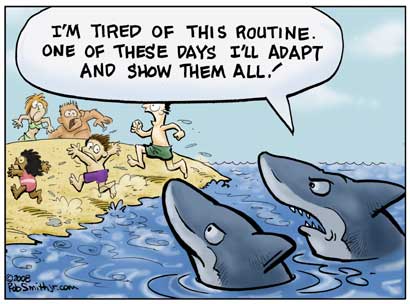


In my opinion and with my experience working with some of  elite athletes, it is important to allow athletes to develop their own routines, whose emergent should be guided by sound principles of warm-up.  This is to say that we would not allow anything and everything in the warm-up for the sake of developing routine, but there should be certain compromises from what coach wants and what athlete like to do. This compromise is especially important in working with already developed and experience athletes, but not so important with younger and inexperienced athletes that need to learn good principles and warm up routines. One solution is to guide the athletes through certain exercises and warm-up principles and allow them to develop their own routine and teach them how to modify them based on their own needs, not what coach likes.

Anyway, coach will never know what bothers certain athlete and what part of his body needs further warming up. This will say that having preset warm-up routines will not allow for this individualization. This is especially evident in the team settings where athletes follow the one size fit all warm-up protocols.



Since having a certain routine both coach and athlete trust is an example of Stability, the question is how to provide Variability in the warm-up to allow for individualization and to avoid boredom.

One example is having a flexible routine, which in contrast with rigid one allows certain changes at the spot. One of the example that could be used is to allow some time for individual needs every now and then between stable warm-up routine. Take a following structure of team warm-up for example:

General Part of the warm-up
1. Jogging and joint circles (directed by coach)
2. 2 mins time allowed for individual needs (athlete choose for themselves, work more on problematic and sore areas)
3. Stretching and activation (directed by coach)
4. 2 mins time allowed for individual needs

Specific Part of the warm-up
1. Sport-specific and progressively (directed by coach)
2. 2mins time allowed for individual needs, more stretching, dynamic stretching, activation, whatever
3. Progressively entering to main part of the workout


Another example of Variability in the warm-up is to slightly change the organization of it while basically still doing the same thing. This may include the organizational solutions, like doing things in circle, lines, standing, jogging, etc.  

The importance of Variability might also be seen in doing warm-up in uncontrolled environment, like warming-up outside in the rain, mud or snow compared to stable environment of the indoor facility.
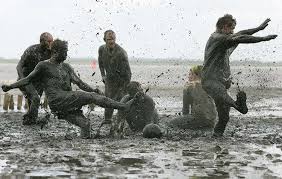

               
Hopefully I have succeeded to draw attention to the interplay of both Stability (routines) and Variability (individualization, boredom prevention, adaptability to environmental constraints) in the warm up.

Thursday, September 30, 2010

Joint-by-Joint approach and Warm-up

The following 'article' was made during the June, 2010 while doing internship at Mike Boyle Strength and Conditioning (MBSC) in Woburn, MA. We had a homework of doing review of Joint-by-Joint and Warm-up DVDs by Mike Boyle. I shared short review of both approached and some of mine opinions/critiques/concerns. Enjoy!


Joints have needs. They are differently built, and they have different function in complex human body and its movements. It could be said that over time movement evolutionary shaped our joints to fit our movement needs. Since the human movement is interplay between stability~mobility[1], different joints contribute to this continuum between these complementary conceptual pairs in different degrees.

Since every joint has possible 6-degrees of freedom, 3 of which are rotational (or physiological) and 3 of which are translational (or accessory), it can be said that each of these degrees for each individual joint has a point in stability-mobility continuum space. This is a movement classification system for different joints and they differ at different degrees of freedom by their structure (cause structure dictates function, yet function over time shaped structure as evolutionary process).  Thus, it is hard to put individual joint at one group (either stability or mobility), but rather their individual degrees of freedom for a given movement task.

According to constraint-led approach to motor control, human movement is an emergent process that happens under the constraints. In this example, joints can be considered constraints, along with their individual 6 degrees of freedom and their corresponding stability~mobility space-point. Thus, in some way joint constraints shape the movement (along with other constraints).

Mark Comerford basically identified one complementary pair in his writings: give~restriction. Basically, since joints and tissues constraint movement patterns, a problem in one joint (or in one or more of his 6-degrees of movement) or musculo-fascial tissue may cause (although it is hard to specify causation, since it is usually circular causation that is happening) a problem at different place. In simple words, a restriction at one area may cause non-physiological „give“ at same place (different movement plane or different degree of freedom) or at more distance place(s). The „give“ is where pain is, and is usually cause by restriction at a different plane (joint or musculo-skeletal tissue).
  
 Physical therapists identified couple of give~restriction issues in human body, and this is the concept that Mike Boyle refers to as joint-by-joint approach. Since some joints (at some specific degrees of freedom or movement planes) are more prone to develop „restrictions“, they need more „mobility work“, while other joints are more prone to „give“ and develop pain, so they need more „stability work“ or at least less mobility work. Mike Boyle, based on this concept identified a given structure:

·         Ankle joint needs more mobility
·         Knee joint needs more stability
·         Hip joint needs more mobility
·         Lumbar spine need more stability
·         Thoracic spine needs more mobility
·         Scapulo-thoracic joint need more stability
·         Gleno-humeral joint need more mobility

Although I would answer „it depends“ to this classification (main reason is that we should talk about different degrees of movement at each joint under specific movement context) it is pretty simple and understandable to provide practice guidelines for the trainers and coaches. But we must remember there is more to it.  

One aspect that Mike talks about is the difference between flexibility and mobility. According to Mike, flexibility is a property of muscles, while mobility is a property of a joint. I may be wrong, but my opinion is that is just linguistic issue. Flexibility is a specific motor quality that is task dependent, and basically can be classified to active, passive, static, dynamic, etc. Anyway, there are different limiting factors (or if you want constraints) to the specific expression of flexibility. Sometimes, it is a muscle issue, sometimes it is a ligament/joint issue, sometimes it is just a pain threshold issues (usually this is what limits passive static flexibility). Thus, in this example Mike Boyle refers to different constraints that limits the flexibility in a given joint and his different planes.

In his warm-up approach, Mike Boyle tries to address different needs of the joints, according to joint-by-joint concept, along with following this concept in strength training design (a nice joint-by-joint approach that includes different degrees of freedom for upper body is presented in Eric Cressey's Shoulder Savers series and Building and Efficient Athlete DVDs). Basically, the structure is following:

1.      Foam roll to address „restrictions“ in musculo-fascial tissues
2.      Isometric stretch, that utilize 3D stretching concept to further address common „restrictions“ in musculo-fascial tissues
3.      Activation work, to „wake up“ given muscle groups (usually glutes, hip rotators and scapulae stabilizers) that are in a „give mode“
4.      Dynamic mobility to further activate and warm-up the body (and to decrease any negative effects of static stretching), imprint some appropriate movement patterns and provide a progressive transition to main workout

The choosing of the means (exercises) within each group depends on the joint-by-joint concept and the difference between linear and lateral training days. 

Some of my thoughts on this approach are the following:
·         There should be more stretching of the upper-body, like traps, pecs
·         There should be more upper body activation/warm-up like push-ups, different kind of arm swings
·         The warm-up is somehow generic. 

I would love to further elaborate on the last point. Even if there are more commonalities in athlete needs or universality  (we learn the physiology of humans, not different athletes) as defined by joint-by-joint, some athletes need more individualized approach. This is the complementary pair: universality~individuality. My point here is that although the warm-up should be  the „same“ (universal) for all athletes, some individuality must be provided. Some athletes need more upper body warm-up, some are more „robust“ and don't need as much warm-up, some need more time to warm up their problematic areas. It is true that young athletes need to learn good warming-up principles and procedure, but more experienced athletes have their own „routines“ and at least we should provide couple of short time periods where athletes are able to do some of their own warm-up, like 1-2min periods at the end of every part of the warm-up where athletes after they finish with universal exercises, can  address some of their individual needs (for example do more rolling for upper body, or stretch the quads more because they feel sore, do more upper body dynamic exercises cause they feel sore/stiff, etc). My point here is that there should be universality, but there should also be individuality. If we want to teach athletes how to fish, we must give them options to choose, but guide them to good choosing. I know it is hard to do it due time-constraints and facility design and logistic (staggered groups), but this is just my opinion and I am providing it for further elaboration. 

Another points is that this warm-up is geared toward context we have at MBSC facility. Since I work with soccer players on the outside, I must address that we need to adapt the warm-up for that kind of context, especially if we warm-up in the mud and under the rain. This is why understanding concepts and principles rather than memorizing routines is more important: it is going to give us solutions under different contexts.  

In summary, joint-by-joint approach is worth studying but we must remember that there is more to it, along with its implementation to MBSC warm-up which is generic routine constructed with specific context in mind which is MBSC facility and logistics.


EDIT:
Just for the example, here is the warm-up we did for a boxing practice (beginners) on April, 2010 in Zrenjanin, Serbia, with coach Milan Piperski.

Warm up structure:
General Part
1. Joint circles and easy short stretches
2. Dynamic warm-up and some BW exercises
Specific Part
3. Specific boxing drills (some technique work and footwork by Kenny Weldon)
4. Shadow boxing (not seen on the video)
Around 20min total.


Please note that this in NOT how we warm-up every time or THE warm-up we do, and not the warm-up you should or must do. Again, this is just an example, and it is one training session taken out of context. Most of the American readers will  find this just  plain weird or maybe unnecessary and long, especially the 'joint circles' part, but please note that this is how we warm-up from elementary school. And I agree on the point that it look like "gey mating ritual". But if you think more about it, aren't all warm-ups and training protocols started from the rituals? Religious, war, etc?

[1] Squiggle sign ~ represents a complementary pair. See Complementary Nature website for more info